You’ve spotted those distinctive striped shells clinging to your boat hull, dock, or water intake – zebra mussels have arrived. These invasive pests multiply at alarming rates, clogging engines and devastating local ecosystems. Understanding how to get rid of zebra mussels is essential for every boat owner and waterfront property manager. From mechanical removal methods like pressure washing and hand scraping to chemical treatments with potassium chloride, there are proven strategies that work. Even better, the Clean-Drain-Dry protocol can prevent reinfestation entirely. With the right techniques and consistent prevention habits, you can protect your equipment and keep our waterways healthy for generations to come.
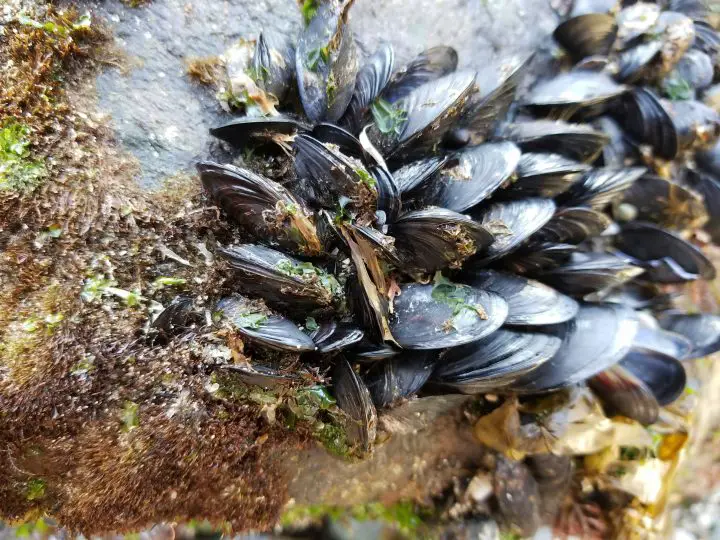
Table of Contents
- What Are Zebra Mussels?
- How Zebra Mussels Spread
- Signs of Zebra Mussel Infestation
- Mechanical Removal Methods
- Chemical Treatment Options
- Biological Control Methods
- Preventing Reinfestation
- Legal Considerations
- Don’t Let Zebra Mussels Sink Your Boating Season
- FAQs – How to Get Rid of Zebra Mussels
What Are Zebra Mussels?
Picture a fingernail-sized shellfish with distinctive brown and tan zigzag stripes that looks like it’s wearing a zebra’s coat – that’s what gives this invasive pest its name. But don’t let the size fool you; a single female can pump out anywhere from 30,000 to 40,000 eggs per reproductive cycle, reaching over a million eggs annually.
What makes these little troublemakers particularly nasty is their unique life cycle. Within about two days after fertilization, the eggs develop into free-swimming larvae called veligers – microscopic critters you can’t even see with the naked eye. These veligers drift in the water for two to three weeks before they start to settle out and attach to hard surfaces.
Zebra mussels are filter-feeding organisms that process up to one liter of water per day, straining out phytoplankton and other particles. While that might sound beneficial, they’re actually stripping the water of nutrients that native fish and wildlife depend on. They attach using thread-like strands called byssal fibers tipped with a strong, sticky substance.
Since the 1980s, this species has invaded the Great Lakes, Hudson River, and numerous other waterways, spreading like wildfire through connected waterways and hitching rides on boats. Adult zebra mussels typically live between two to five years, reaching sexual maturity after about one year of growth.
Related: How to Clean a Boat: A Step-by-Step Guide for Beginners
How Zebra Mussels Spread
Zebra mussels are believed to have been transported by freighters from European ports in ballast water, which was discharged into the Great Lakes. That was the initial invasion, but the ongoing spread? That’s largely on us, recreational boaters.
Boat trailers, ballast tanks, and hulls are major transport vectors for these invasive mussels. A recent University of Minnesota study found that wakeboard boats with their large ballast tanks are particularly effective at transporting zebra mussel larvae – those tanks can hold thousands of gallons of water, giving veligers a nice, protected ride to a new lake.
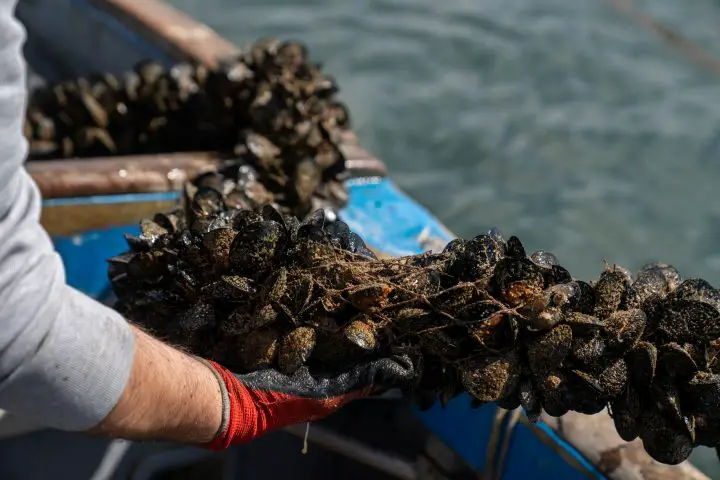
Microscopic veligers can survive in water held in the bilge, live wells, motors, or bait buckets. Mussels can attach to the bottom of your boat, in intake pipes for engines, in the bilges, or on any surface that’s wet and comes into contact with raw lake water. Larger adult zebra mussels can live several days out of water in moist, shaded areas, which means that a quick drive to the next lake might not be enough to kill them off.
Signs of Zebra Mussel Infestation
Spotting zebra mussels early can save you a world of headaches down the road. They’re easy to identify with their distinct, flat-bottomed ‘D’ shape that allows them to sit flat against surfaces, and those characteristic black, zigzag stripes against a cream background. During spawning season, mussels colonize in densities ranging from 300,000 to 1,000,000 individuals per square meter.
Common signs to watch for:
- Mussels are attached to submerged rocks, dock pilings, boat hulls, water intake pipes, and any other hard surface underwater
- Gritty texture when running your hand along boat hulls – young microscopic zebra mussels may be attached
- Clusters on hard surfaces like water pipes, boats, plants, crayfish, and any stable structure
- Sharp-edged shells washing up on shore from storms and colonization on rocks near the shoreline
- Dramatically increased water clarity as mussels filter vast quantities of water, removing suspended particles and algae
- Excessive aquatic plant growth and potentially more frequent algal blooms due to increased sunlight penetration
An easy monitoring method is to suspend a length of PVC pipe in the water body and haul it out regularly to check for attached mussels. If you’ve got a dock, also periodically check lake shorelines stabilized with rock or concrete, as this will be a likely area of mussel colonization.
Mechanical Removal Methods
Let’s get down to the nitty-gritty of actually removing these stubborn creatures. Dock poles, boat lifts, and other areas with clusters of shells stuck to their surface are removed manually by scraping with specialized equipment and brushes. I won’t sugarcoat it – this is labor-intensive work, but for small-scale infestations on your personal gear, it’s often your best bet.
Effective mechanical removal methods:
- Hand scraping using paint scrapers, screwdrivers, chisels, and knives, then using suction devices to vacuum everything into collection bags
- High-pressure hot water to remove zebra mussels from surfaces
- Hot water at 140°F for boats in infested waters, or using a do-it-yourself car wash with high-pressure hot water
- Running boats frequently in infested waters – small juvenile mussels are soft and get scoured off the hull at high speeds
One success story: in 2000, divers removed more than 19,000 juvenile and adult zebra mussels by hand from Lake George, New York, and their efforts have been successful to this day. The catch? They got them early, before the population exploded.
Chemical Treatment Options
When mechanical removal isn’t practical or effective, chemicals might be your answer. However, chemical treatments come with significant regulations and environmental considerations that vary by location.
Available chemical control methods:
- Potassium chloride (potash) – the only chemical that has successfully eradicated mussels without harming other species in a water body. Successfully used at Millbrook Quarry, Virginia, in 2006
- Copper sulfate and copper-based algaecides – early life stages prove more sensitive than adult mussels
- Copper-containing bottom paints and outdrive paints for boats, as zebra mussels cannot stand copper
- Oxidizing chemicals (chlorine, bromine, potassium permanganate) are used in closed systems like water intake pipes with injectors
Potassium chloride is not currently approved as a pesticide in all states, and options for use must be reviewed with relevant pesticide regulation authorities. Copper sulfate can result in killing large numbers of fish and harmful effects to other aquatic species if not carefully managed. Always check local regulations before considering chemical treatments.
Biological Control Methods
Let’s talk about the good guys in this fight – the fish and wildlife that actually eat these invasive mussels. While natural predators help control populations, they’re not a complete solution on their own.
Natural predators and biological controls:
- Freshwater drum and redear sunfish are significant predators, with studies showing 100% of adult redear sunfish stomachs contained zebra mussels in some environments
- Redear sunfish, nicknamed “shellcrackers,” have specialized pharyngeal teeth in their throat strong enough to crush mussel shells
- Other fish species include blue catfish, redhorse suckers, river carpsuckers, yellow perch, pumpkinseed sunfish, and lake sturgeon
- Diving ducks, especially scaup and bufflehead, consume significant quantities in the Great Lakes region
- Crayfish can prey on smaller zebra mussels
The reality check? No single predator effectively controls zebra mussel populations – their high reproductive rates and rapid colonization abilities often overwhelm the impact of predation. Predators prefer other food sources when available, and zebra mussels colonize habitats where predators have difficulty accessing them.
Related: How to Winterize Your Boat: Step-by-Step Guide
Preventing Reinfestation
Here’s the single most important thing you can do to stop the spread: follow the Clean-Drain-Dry protocol religiously. Clean off visible aquatic plants, animals, and mud from all equipment before leaving water access, rinse equipment and boat hulls with high-pressure hot water when possible.
Drain all water-holding compartments, including ballast tanks, live wells, and bilge areas, before leaving a water access. Keep drain plugs out and water-draining devices open while transporting watercraft. Dump unused bait in trash cans and bucket water on dry land above the high water line, not in the water.
Dry everything for five days or more, or wipe with a towel before reuse. Water temperatures of 120°F for at least 2 minutes or 140°F for at least 10 seconds will kill zebra mussels and some other aquatic invasive species.
Many states now require boat inspections that check watercraft for any attached mussels and standing water. For equipment left in water bodies for more than a day, use 140°F hot water spray with a low-flow rinse for 10 seconds on each part. Many boat launch sites have decontamination stations with high-pressure hot water washing available, often free of charge – take advantage of these resources.
Legal Considerations
The legal side of this issue is no joke. Zebra mussels are listed as “injurious” wildlife under the Lacey Act (18 U.S.C. 42), which prohibits the importation and interstate transport of species listed as injurious wildlife. Violating this law is a criminal offense. The National Invasive Species Act (NISA) specifically targets aquatic nuisance species, including zebra mussels, authorizing regulation of ballast water and funding for prevention and control research.
Many states classify zebra mussels as prohibited invasive species, making it unlawful to possess, import, purchase, transport, or introduce them except under permit. In Texas, possession or transportation is illegal, with first-offense violations punishable by fines up to $500. If you find evidence of zebra mussels in previously uninfested waters, report it immediately to your state DNR invasive species specialist. Contact your state’s Department of Natural Resources for specific regulations in your area.
Don’t Let Zebra Mussels Sink Your Boating Season
The fight against zebra mussels boils down to one thing: prevention is everything. These tiny invaders can wreck your engine, destroy native ecosystems, and cost you serious cash in fines and repairs. You’ve got plenty of removal options – from scraping and pressure washing to chemical treatments and natural predators – but your best weapon is the Clean-Drain-Dry protocol. Those few extra minutes at the boat ramp to drain your bilge, empty your live wells, and let everything dry for five days between lakes? That’s what keeps these pests from hitching a ride to your next fishing spot. Stay vigilant, use those free decontamination stations, and you’ll protect both your boat and our waterways for years to come.
FAQs – How to Get Rid of Zebra Mussels
What naturally kills zebra mussels?
Several natural predators feed on zebra mussels, including freshwater drum, redear sunfish (nicknamed “shellcrackers”), blue catfish, and diving ducks like scaup and bufflehead. Drying also kills them – adult mussels can only survive out of water for about five days in dry conditions, though up to 21 days in very wet conditions. Extreme temperatures work too, as they stop growing at 3°C and start dying at 30°C.
What is the best way to get rid of zebra mussels?
The most effective approach combines prevention with removal: Clean all visible mussels from surfaces, drain all water-holding compartments, and dry equipment for at least five days between water bodies. For attached mussels, use hot water at 140°F with high-pressure washing or manual scraping with specialized tools. For larger infestations in contained areas, potassium chloride has successfully eradicated populations without harming other species.
What repels zebra mussels?
Copper is toxic to zebra mussels – they cannot attach to cupronickel alloys, and many boaters use copper-containing bottom paints and outdrive paints as deterrents. Silicone-coated gratings and pipes are approximately 80% successful in minimizing zebra mussel attachment in both static and dynamic systems. Running your boat frequently at high speeds also prevents attachment, as small juvenile mussels are soft and get scoured off the hull.
What’s been done to get rid of zebra mussels?
Hand removal succeeded at Lake George, New York, in 2000, where divers removed over 19,000 mussels by hand. Potassium chloride successfully eradicated zebra mussels at Millbrook Quarry, Virginia, in 2006. Lake Zorinsky, Nebraska, was completely drained in 2010, successfully eradicating the population. Most states now require mandatory boat inspections and decontamination programs to prevent the spread. Federal regulations through the Lacey Act and National Invasive Species Act authorize ballast water control and prevention research.
