
There’s something magical about a cat on a boat — perched on the bow, ears back, watching the water rush by. For a growing number of live-aboards and cruisers, bringing a cat along isn’t a novelty. It’s just life. Cats are independent enough to handle the quiet stretches but affectionate enough to keep you company on long passages. Once a cat claims a vessel as home, they adapt remarkably well to the rhythms of boat life — the gentle rocking, the sounds of lines and sails, the hum of the engine.
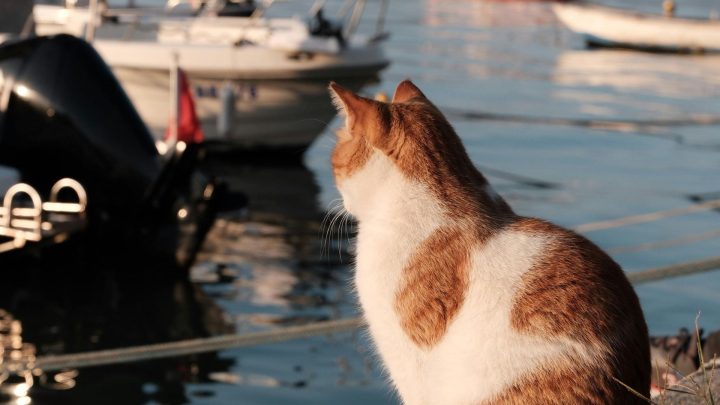
Table of Contents
- Why Cats on Boats?
- Safety Tips
- Best Cat Breeds for Boating
- Training Your Cat
- Essentials to Bring
- Health Considerations
- Entertainment & Comfort
- Life’s Better With a First Mate Who Purrs
- FAQs
Why Cats on Boats?
Cats are natural observers and curious creatures, which suits the boating lifestyle surprisingly well. Give them a portlight or a cockpit perch, and they’ll spend hours watching fish, birds, and the passing scenery. For solo sailors especially, a cat isn’t just a pet — it’s genuine companionship on long passages.
Cats are also territorial by nature, and a boat becomes their territory fast. Once they settle in, they adapt to the rhythms of life afloat with impressive ease. They’re low-maintenance compared to other pets, content to patrol their floating kingdom while you handle the sailing.
For many cruisers, adding a cat to the crew is simply a lifestyle choice — one that brings warmth, entertainment, and a surprising sense of normalcy to life on the water.
Safety Tips
Keeping a cat safe on a boat takes some preparation, but it’s straightforward once you’ve got the right setup in place.
- Fit a pet life jacket: Cat life jackets are real, necessary, and potentially life-saving. A properly fitted jacket keeps them buoyant if they go overboard and gives you something to grab in an emergency.
- Use a harness, not a collar: Collars can slip or snag on lines. A well-fitted harness paired with a tether is the safer choice when your cat is on deck.
- Net the lifelines: Standard lifeline spacing is wide enough for a cat to squeeze through. Mesh netting along the rails closes that gap — it’s inexpensive, easy to install, and worth every penny.
- Create a safe zone below decks: When the weather turns rough, or you’re maneuvering in a tight marina, your cat needs somewhere secure and enclosed. Train them early to accept being below during high-activity moments.
- Supervise deck time: Never leave your cat unsupervised on deck in open water, especially in choppy conditions or at night.
Related: 6 Tips for Sailing with Your Dog
Best Cat Breeds for Boating
Not every cat is cut out for life afloat, but certain breeds take to it with ease. Temperament and adaptability are the two things to prioritize when choosing a boat cat.
Maine Coon cats are a top pick for boaters. They’re large, sociable, and famously laid-back. Historically bred as working cats, they have a natural affinity for maritime environments and tend to handle new experiences without much fuss. They bond closely with their owners, which makes them a reliable and affectionate companion on long passages.
Ragdolls are another excellent choice. They’re calm, docile, and handle stress well — all qualities that matter when you’re living in a compact, moving environment. Ragdolls tend to go with the flow, which is exactly what you want from a cat sharing your 40-foot home. They’re also gentle and easy to handle, which is helpful when you need to move them quickly during sail changes or docking.
Siamese cats bring a different kind of energy to the boat. They’re highly intelligent, deeply bonded to their people, and thrive on stimulation — all of which boat life provides. They tend to be more vocal about their preferences, so expect some input on every decision you make. That said, their loyalty and curiosity make them genuinely entertaining crew members.
Other breeds worth considering include the Turkish Van, which has a well-documented affinity for water, and the American Shorthair, known for its adaptable, even-tempered personality. At the end of the day, individual temperament matters as much as breed — a calm, curious cat of any breed can thrive on a boat with the right introduction and training.
Training Your Cat
Preparing a cat for boat life takes time, consistency, and a decent supply of treats — but it’s absolutely doable. The earlier you start, the smoother the transition will be.
Harness training is the priority. The goal isn’t to walk your cat like a dog — it’s about control and safety on deck. Start with short harness sessions below decks, letting your cat get comfortable with the fit before you introduce any movement or outdoor exposure. Gradually work up to the cockpit, then the dock, before you ever leave the slip.
Acclimating your cat to motion is equally important. Before any offshore passage, take them out for short daysails in calm conditions. Let them find their footing, identify their preferred spots, and build confidence with the movement of the boat. Skipping this step often results in a stressed, hiding cat for the entirety of your first real passage.
Teaching a solid “below” command is one of the most useful things you can do. It means get down the companionway immediately, and it can be trained with consistent repetition and positive reinforcement. This command becomes essential during sail handling, rough weather, or any moment when a cat on deck creates a safety risk.
Setting boundaries early also matters. Cats are fast learners when there’s a consistent consequence. Areas near winches, lines, and the helm should be off-limits, and reinforcing that from day one makes life easier for everyone aboard. Keep training sessions short, reward generously, and build on small wins — your cat will surprise you with how quickly they adjust to the routine.
Essentials to Bring
Packing smart for a cat on board makes a real difference in day-to-day life afloat.
- Stainless steel bowls with non-slip bases: These stay put when the boat moves and are easy to clean. Avoid plastic, which holds bacteria, and ceramic, which slides everywhere.
- Fresh water supply: Hydration is critical, especially in warm climates. A small drip fountain encourages cats to drink more and doubles as onboard entertainment.
- Compact, covered litter box: Choose one with high sides to contain scatter during motion. Keep it in a stable, low-traffic spot below decks.
- Biodegradable litter: Makes disposal at sea or in marina facilities much simpler and is better for the environment.
- Pet first aid kit: Include gauze, antiseptic, tweezers, any prescription medications, and your vet’s contact information.
- Printed health records: Keep vaccination certificates and health documents accessible — some countries and marinas require them for entry.
- Toys and a scratching post: A compact scratching post protects your upholstery, and rotating a few toys keeps your cat mentally engaged on longer passages.
Related: 12 Best Boat Dogs: Water-Loving Breeds That Rule the Waves
Health Considerations
Keeping a cat healthy on a boat comes down to preparation, awareness, and staying ahead of potential issues before they become real problems.
Cats can experience motion sickness, though they tend to handle it better than dogs. Signs include drooling, lethargy, and vomiting. If your cat struggles in choppy conditions, speak with your vet before departure — safe anti-nausea medications are available, and it’s worth having them on hand.
Hydration is another area to watch closely, especially when cruising in warm latitudes. Cats are notoriously poor at self-regulating water intake, and the heat can sneak up on them fast. Monitor water consumption, ensure ventilation below is adequate, and provide shaded spots in the cockpit during hot days.
Before going offshore or crossing international borders, schedule a full vet checkup and confirm that vaccinations are current. Rabies certificates and health certificates with recent issue dates are commonly required at foreign ports and occasionally inspected. Doing this research well in advance saves a lot of hassle at the border.
Regular checkups matter even when you’re cruising remotely. Telemedicine vet services have expanded significantly and offer a practical option when you’re far from shore. Keep a list of veterinary contacts at your planned ports of call — it’s one of those things you’ll be glad you prepared if you ever actually need it.
Entertainment & Comfort
A happy cat on a boat is an easy cat on a boat, and keeping them mentally stimulated and physically comfortable doesn’t take much.
Key ways to keep your cat entertained and comfortable aboard:
- Set up an observation perch near a portlight or in the cockpit — watching fish, birds, and passing scenery is genuinely engaging for cats and keeps boredom at bay.
- Use wand-style fishing toys for play sessions in tight spaces — they work brilliantly below decks and burn off energy on long passages.
- Install a compact scratching post to protect your upholstery — on a boat, that upholstery is expensive to replace.
- Rotate toys regularly to keep things fresh and prevent a bored cat from finding their own entertainment.
- Create a dedicated sleeping spot — a bolster bed wedged into a stable corner or a small hammock below a bunk gives your cat a secure place that doesn’t shift with the boat’s motion.
- Ensure adequate ventilation in resting areas, especially in warm climates, so sleeping spots stay cool and comfortable.
Once your cat has claimed their perch and their sleeping spot, they’ll settle into the rhythm of boat life faster than you’d expect.
Life’s Better With a First Mate Who Purrs
Taking a cat on a boat isn’t as wild as it sounds — thousands of cruisers do it successfully, and with the right prep, it’s one of the most rewarding parts of the liveaboard lifestyle.
The key is setting yourself and your cat up for success from the start. Choosing an adaptable breed like a Maine Coon or Ragdoll, starting harness and motion training early, and netting your lifelines are the decisions that separate a confident boat cat from a stressed one. Keeping them healthy, hydrated, and entertained on long passages comes down to smart packing and solid routines — the right gear, a good litter setup, a vet you can reach, and a perch with a view will take you further than you’d think. With the right introduction, your cat won’t just survive boat life — they’ll own it.
FAQs
Are cats okay on boats?
Yes — cats can do great on boats with the right preparation. Most cats adapt well to life afloat once they’ve been gradually introduced to the motion and sounds of a vessel. Key things like a fitted life jacket, netted lifelines, and a secure space below decks go a long way toward keeping them safe, comfortable, and happy out on the water.
