Sailing the Caribbean islands is about as good as it gets on the water. Picking the right islands, nailing the timing, figuring out whether to charter or bring your own boat — there’s a lot to think through before you cast off. Get those decisions right, and you’re in for steady trade winds, crystal-clear anchorages, and a new island on the horizon every couple of days. This covers everything from the best sailing seasons and top destinations to real budget breakdowns and a ready-to-use 7-day BVI itinerary — everything you need to plan a Caribbean sailing trip with confidence.
Table of Contents
- Sun, Wind, and a Thousand Miles of Paradise
- Best Time to Sail the Caribbean
- Popular Caribbean Sailing Destinations
- Planning Your Sailing Trip
- Chartering vs. Owning a Boat
- Essential Sailing Skills
- Costs of Sailing the Caribbean
- Safety Tips for Caribbean Sailing
- The Caribbean Is Calling — Are You Ready to Answer?
- FAQs – Sailing the Caribbean Islands for Beginners
Sun, Wind, and a Thousand Miles of Paradise
The Caribbean Sea covers more than a million square miles, and within it you’ll find some of the most varied sailing grounds on the planet. Steady trade winds, crystal-clear water, and a new island waiting just over the horizon every couple of days — it’s easy to see why this region sits at the top of nearly every sailor’s bucket list.
The British Virgin Islands alone could keep you busy for a month without anchoring in the same spot twice. Forty-odd islands and cays are packed into a compact cruising ground with reliable winds and protected anchorages. The Bahamas offer something completely different — shallow, electric-turquoise water and a wild remoteness that’s hard to find anywhere else. Caribbean sailing is accessible too. The trade winds blow from the east with remarkable consistency, making routes predictable and passages manageable for sailors of most experience levels.
Related: Top 10 Liveaboard Marinas in Puerto Rico: Your Guide to Waterfront Living
Best Time to Sail the Caribbean
Hurricane season runs from June 1 through November 30 in the Atlantic basin. Most experienced Caribbean sailors either head north for the summer, haul their boats in a protected hurricane hole, or sail south of the hurricane belt — roughly below 12°N latitude — where islands like Grenada and Trinidad sit outside the typical storm tracks.
The sweet spot for Caribbean sailing is mid-November through May. Storms have wound down, the heat eases off slightly, and the anchorages fill up with boats from around the world.
From roughly December through February, the trade winds kick up noticeably — often hitting 20–25 knots consistently, with gusts beyond that. These are known as the Christmas Winds. For experienced sailors, this means fast, exhilarating passages downwind. For beginners or anyone on a charter expecting gentle breezes, it can be a surprise. Reef early and keep a preventer on the boom.
Peak season (December through April) brings the best weather but also the biggest crowds and highest prices. If you’re flexible, late April or early May gives you near-perfect conditions, thinner crowds, and better deals on marina fees.
Popular Caribbean Sailing Destinations
The British Virgin Islands
The BVIs are the most popular charter destination in the Caribbean for good reason. Passages are short — rarely more than a few hours between islands — the infrastructure for sailors is excellent, and the anchorages at Norman Island, the Indians, and the Bight are genuinely world-class. First-time charterers do exceptionally well here, and the mooring ball system throughout the national park areas makes anchoring straightforward.
St. Lucia
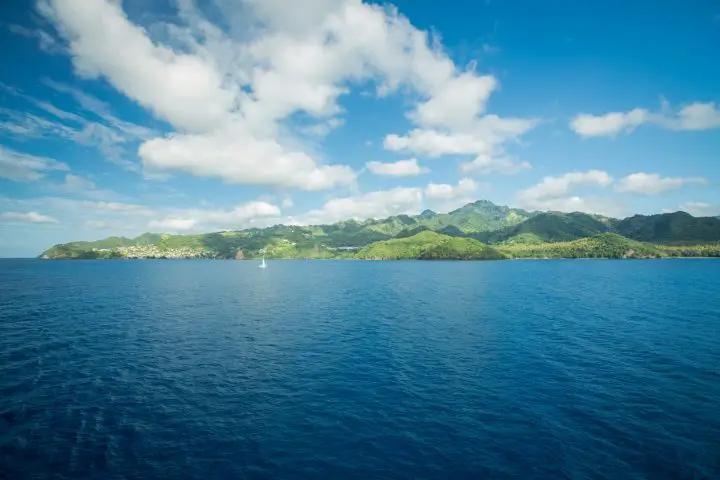
The Pitons — twin volcanic peaks rising dramatically from the waterline — are one of the most iconic sights in Caribbean sailing. Marigot Bay is a beautifully sheltered anchorage with excellent provisioning and dining options nearby. The sailing between St. Lucia and neighboring islands like St. Vincent and the Grenadines opens up some of the best cruising grounds in the entire Eastern Caribbean, with consistent trade winds and uncrowded anchorages.
Antigua
Antigua hosts Antigua Sailing Week every April — one of the biggest regattas in the Western Hemisphere and a bucket-list event even if you’re just spectating from the water. English Harbour is steeped in maritime history, with Nelson’s Dockyard serving as a fully operational marine facility and museum. The sailing around Antigua’s south coast offers well-protected anchorages and some of the most reliable wind in the region.
The Bahamas
Technically, in the Atlantic rather than the Caribbean Sea, the Bahamas belong in any conversation about island hopping in this part of the world. The Exuma Cays in particular are a cruising ground unlike anything else nearby — shallow, pristine, and genuinely remote in places. The Bahamas also serve as a natural stepping stone for sailors heading south from the US East Coast, making them a common first stop on longer Caribbean passages.
Planning Your Sailing Trip
Getting the logistics right before you leave saves a lot of headaches on the water. The Caribbean Tourism Organization is a useful starting point for understanding inter-island entry requirements, since customs and immigration rules vary significantly from island to island and can change with little notice.
Route planning should factor in the direction of the prevailing trade winds. Sailing east against the trades is slow and exhausting. Smart itineraries are built to make as many passages as possible with the wind behind you or on the beam.
Every island group has its own entry requirements. In the BVIs, you’ll need to clear customs and immigration, pay cruising permit fees, and potentially purchase a National Parks permit for certain anchorages. The Eastern Caribbean islands generally require a valid passport, ship’s papers, and proof of insurance. Keep originals and copies organized in a waterproof bag — customs officials in smaller islands still do things by paper.
Work backwards from your total budget. Accommodation (marina vs. anchoring), provisioning, fuel, charter fees or boat costs, flights, and unexpected expenses all need to be factored in. Anchoring out as much as possible versus staying in marinas is the single biggest lever on your daily spend.
Chartering vs. Owning a Boat
For most people visiting the Caribbean, chartering makes far more sense than shipping or buying a boat. The two biggest names in bareboat chartering are Moorings Yacht Charters and Sunsail — both operate large fleets out of the BVIs, St. Lucia, Antigua, and other key bases throughout the region. Their boats are well-maintained, provisioned to your spec, and ready to sail on arrival. Chartering also lets you try different boat sizes and types without long-term commitment.
A bareboat charter means you’re the skipper and take full responsibility for the vessel and navigation. Most charter companies require proof of sailing experience before handing over the keys. If you’re not fully confident handling a boat solo, a crewed charter — where a professional captain and sometimes a cook come with the boat — removes the stress, and the cost split among a group is often more reasonable than people expect.
If you’re planning to spend significant time in the Caribbean year after year, owning starts to make financial sense, though maintenance, hurricane season storage, insurance, and the logistics of delivery all need to be factored honestly into that equation. Many liveaboard cruisers sail their own boats down the US East Coast, through the Bahamas, and into the Caribbean — a proper offshore passage in its own right.
Related: 10 Best Liveaboard Marinas in Florida
Essential Sailing Skills
The Caribbean’s generally forgiving conditions make it approachable for intermediate sailors, but you need a genuine baseline of competency before taking the helm. The Royal Yachting Association (RYA) offers internationally recognized certifications that most charter companies accept as proof of experience — a Day Skipper or Coastal Skipper qualification will get you into most bareboat programs.
Beyond certification, here’s what you actually need to be comfortable with before arriving:
- Anchoring in varied conditions — including picking up mooring balls efficiently, which sounds simple until you’re doing it in a crosswind with a catamaran that doesn’t like going in reverse
- Basic navigation — understanding what you’re looking at beyond just following the GPS arrow
- Sail trim — getting the most out of the trade winds rather than just motor-sailing everywhere
- Squall management — Caribbean weather moves fast, and being able to reef quickly and confidently matters
- Visual piloting — reading water color to identify shallow spots and reef hazards in coral-heavy areas
- VHF radio operation — NOAA broadcasts excellent marine weather throughout the region; making it a morning ritual keeps you ahead of surprises
Costs of Sailing the Caribbean
Caribbean sailing covers an enormous cost range — from budget cruisers anchoring out and cooking their own meals to fully crewed superyacht charters running tens of thousands per week. For the realistic middle ground: a bareboat charter for a 40-foot monohull out of the BVIs runs roughly $3,000–$6,000 per week, depending on season. Catamarans, which most groups prefer for the space and stability, run higher — often $5,000–$10,000+ per week for a well-equipped 45-footer in peak season. Split among six to eight people, that’s competitive with a resort vacation.
Day-to-day costs depend on your lifestyle aboard. Mooring ball fees in the BVI National Park areas run around $30–$35 per night. Marina fees vary — budget $2–$4 per foot per night in a proper facility. Fuel costs depend on how much motoring you do; in the Caribbean, the goal is to keep that number low.
Most provisioning in the BVIs and USVI is transacted in US Dollars. The Eastern Caribbean Dollar (XCD) is the official currency across much of the Windward and Leeward Islands, though USD is widely accepted. Keep small bills aboard for dinghy dock fees, fresh provisions from local vendors, and beach bar tabs.
Safety Tips for Caribbean Sailing
The Caribbean is a safe cruising ground for the vast majority of sailors. The biggest risks aren’t dramatic — they’re the everyday ones that catch people off guard when they’re not paying attention:
- Monitor weather daily — squalls can build from nothing to 30 knots in under 20 minutes. NOAA provides excellent marine forecasts throughout the region; tune into WX channels on your VHF every morning
- File a float plan — leave your intended route and check-in schedule with someone ashore before every passage
- Don’t let your itinerary override your judgment — if conditions aren’t right, the island will still be there tomorrow
- Wear polarized sunglasses at all times underway — they cut glare and allow you to read water depth and spot reef hazards visually, which no chart can fully replace
- Don’t leave your dinghy unlocked overnight — petty theft of dinghies and outboards does occur in some anchorages
- Stay informed on regional security — piracy is not a significant concern in most of the Caribbean, but specific areas near Venezuela’s coast warrant extra caution. Noonsite maintains up-to-date cruising security reports worth checking before departure
- Cross-reference your charts with local knowledge — Navionics and Garmin charts are reliable but not infallible in coral-heavy areas; asking locally before entering unfamiliar anchorages is always worth the two minutes it takes
The Caribbean Is Calling — Are You Ready to Answer?
The Caribbean isn’t just a sailing destination — it’s the sailing destination, and getting out there is more achievable than most people think. Aim for mid-November through May to avoid hurricane season and score the best trade winds. Whether you bareboat charter with Moorings or Sunsail, hire a crewed yacht, or sail your own boat down the coast, there’s a version of this trip for every budget and experience level. Brush up on your anchoring, get comfortable reading the weather, and grab an RYA certification if you need one. Budget smart, keep your documents organized, and let the trade winds handle the rest. Pick your islands — the Caribbean’s been waiting long enough.
FAQs – Sailing the Caribbean Islands for Beginners
Is sailing in the Caribbean easy?
The Caribbean is one of the most forgiving sailing destinations in the world. Consistent trade winds, short passages between islands, and well-marked anchorages make it manageable for intermediate sailors. That said, you still need solid basic skills — anchoring, weather reading, and reef navigation are non-negotiable. It’s approachable, not effortless.
Which Caribbean island is best for beginners?
The British Virgin Islands are the go-to for first-timers. Passages are short, anchorages are well-protected, and the sailing infrastructure is excellent. Mooring balls handle most of the anchoring, charts are reliable, and help is never far away. It’s genuinely the best place in the Caribbean to build confidence on the water.
What are the best months to sail in the Caribbean?
Mid-November through May is the sweet spot. Hurricane season winds down by late November, trade winds become consistent, and conditions are generally settled and predictable. If crowds and pricing matter to you, late April and early May offer near-perfect weather with fewer boats in the anchorages and better deals on charters.
